Realistic Orbital Physics
An Unreal Engine 5 plugin that simulates realistic n-body gravitational physics and enables procedural generation of stable planetary systems. Built for performance, extensibility, and ease of use.
Overview
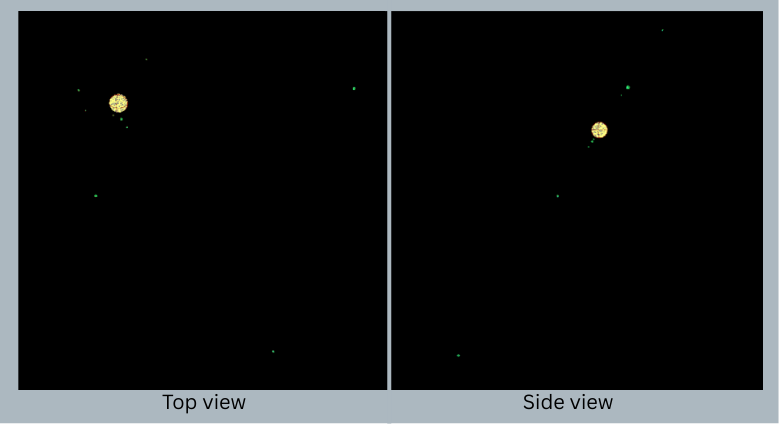
This project started as my master's dissertation, focused on building a highly optimized orbital physics simulation capable of generating stable, procedurally generated planetary systems. The core challenge was to simulate large-scale N-body interactions while maintaining performance and long-term orbital stability.
As the project evolved, the system was refactored into a production-ready Unreal Engine plugin. The goal shifted from pure simulation accuracy to usability: making complex orbital mechanics easy to implement, configure, and scale inside real gameplay scenarios. The result is a flexible system that balances physical realism, performance, and developer friendliness.
Technical Challenges
1. N-Body Performance at Scale
A naive N-body simulation has O(n²) complexity, with every body interacting with every other body. While manageable at small scales, this quickly becomes impractical as body counts increase.
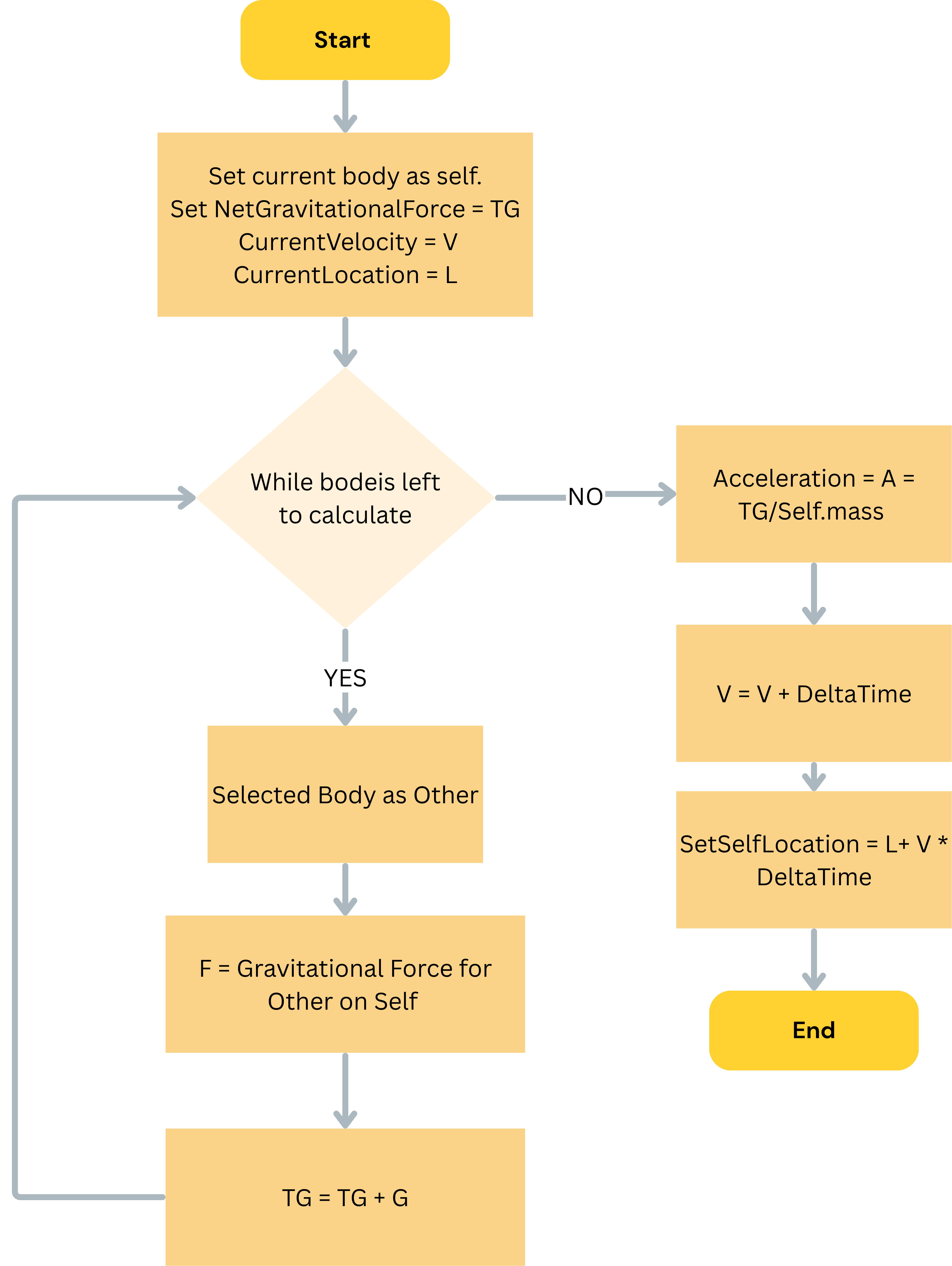
To address this, the system was designed around multithreading, partitioned simulation, and aggressive optimization strategies. Workloads are distributed across threads, unnecessary calculations are avoided, and data is structured to remain cache-friendly. This allows the simulation to handle thousands of bodies without noticeable performance degradation.
2. Stable Orbit Generation
Procedurally generating planetary systems that remain stable over time was a major challenge. Randomized initial conditions often result in planets colliding, spiraling inward, or being ejected from the system.
The generator uses Keplerian orbital mechanics to calculate initial velocities that produce stable orbits, with configurable eccentricity and inclination ranges. Generated systems are validated against known instability patterns, avoiding problematic resonances that could destabilize the simulation. A modified Hill sphere model is also applied to further enforce long-term stability.
3. Trajectory Prediction
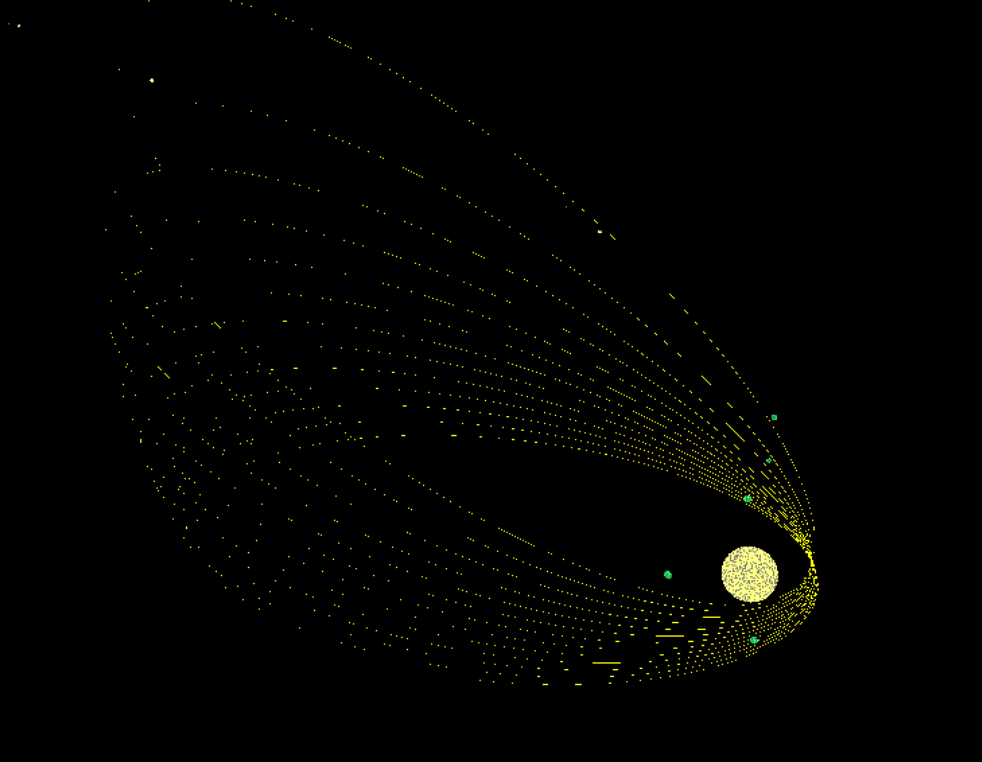
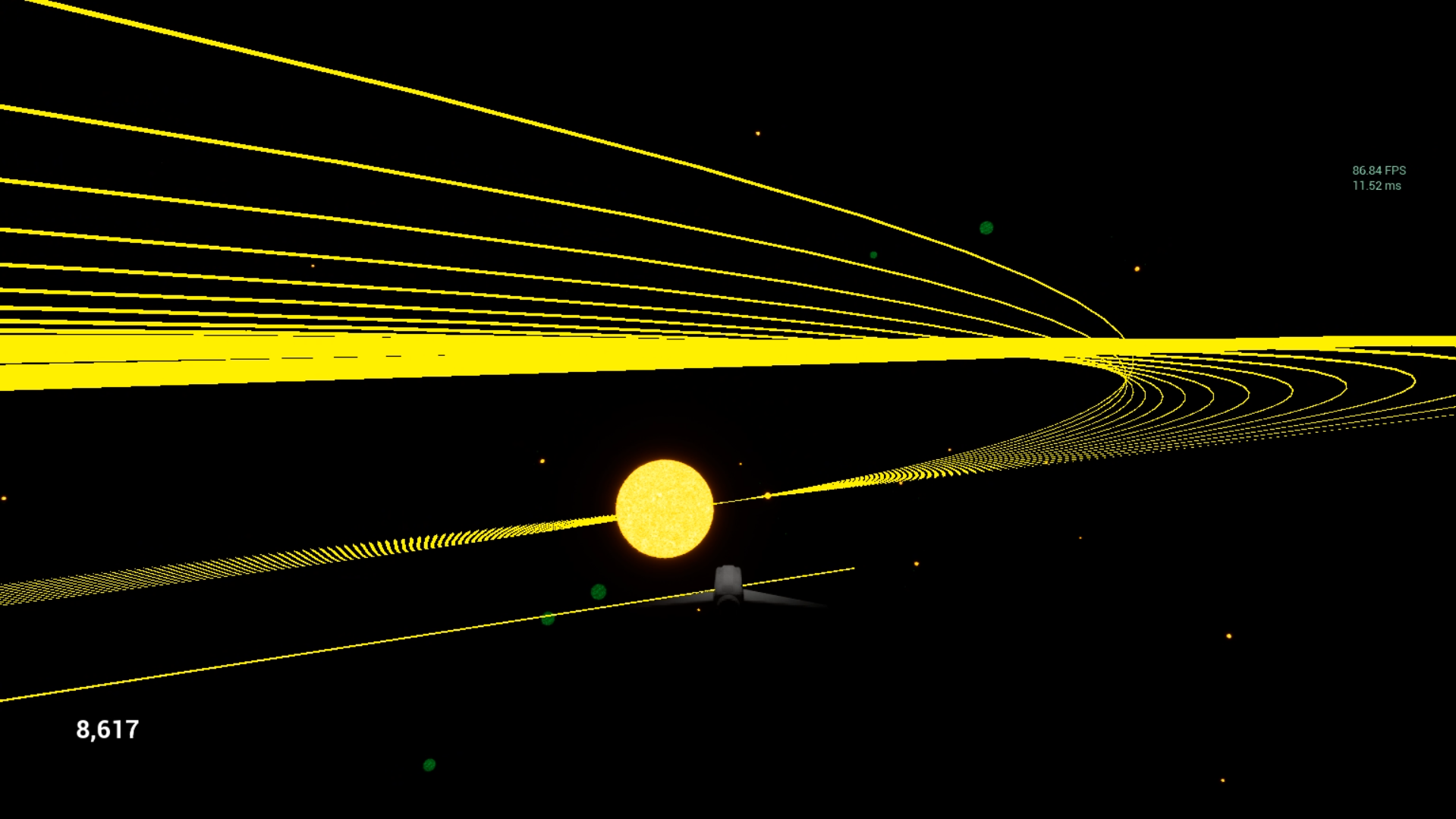
For gameplay features such as navigation, targeting, and planning, players need to see where bodies will be in the future. This requires simulating forward in time without affecting the live game state.
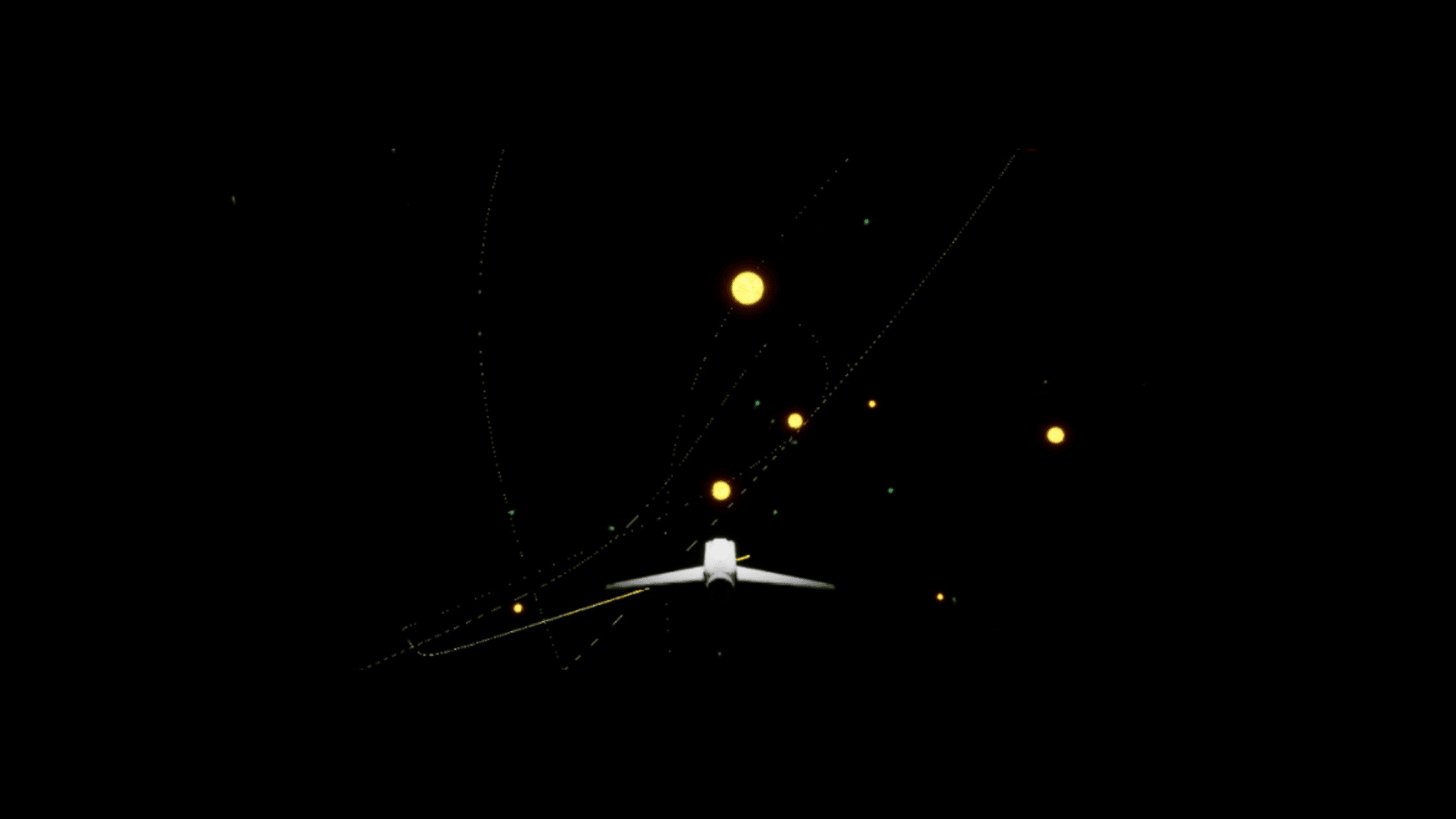
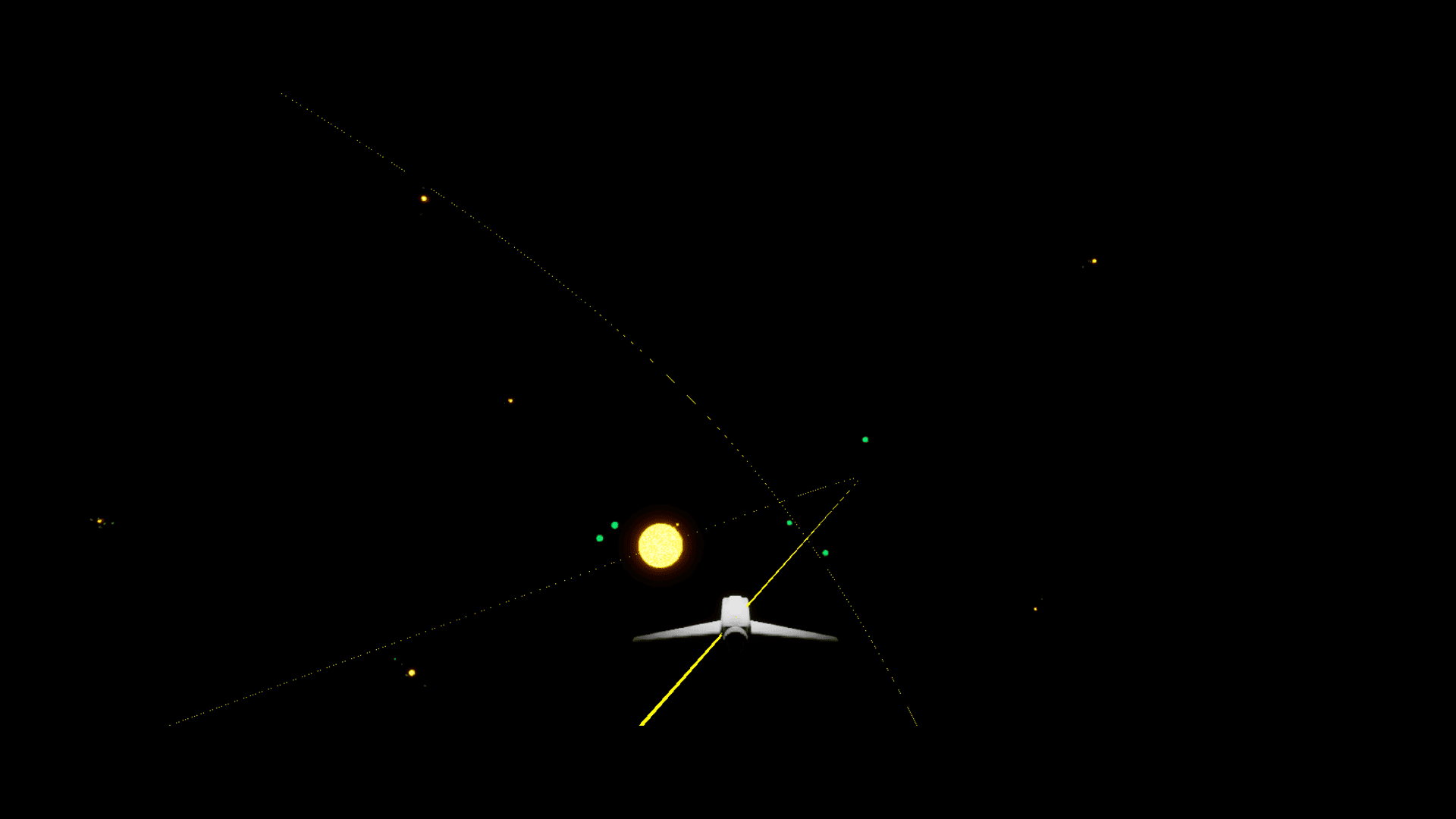
To solve this, a prediction system was built that clones the current simulation state and runs it forward on a separate thread. The resulting trajectory data can be visualized as orbital paths, with configurable prediction lengths and step sizes to balance accuracy and performance.
Architecture Decisions
The core simulation is implemented using Unreal Engine's Subsystem architecture, providing automatic lifecycle management and global accessibility throughout the project.
From the start, the plugin was designed to be Blueprint-friendly. All key parameters are exposed, events are broadcastable, and common operations are available as dedicated nodes. This constraint encouraged cleaner system boundaries and more deliberate API design, resulting in a plugin that is both powerful and approachable for non-C++ users.
Outcomes & Learnings
The plugin reliably simulates 1,000+ simultaneous bodies at playable framerates on mid-range hardware, making it suitable for real-time games and simulations.
Key takeaways from the project include:
- Practical multithreading in gameplay systems
- Rigorous performance optimization and profiling
- Testing and validation using Unreal Insights
- Designing developer-focused APIs without sacrificing system depth
Gallery